Augmented Reality · A Living Layer
Step Inside the Story
Hold up a phone near the Rhode Island Vietnam Veterans Memorial and the space around it opens into portals: doorways into moments in the history of the war. Visitors won’t watch these stories on a screen. They’ll walk into them.
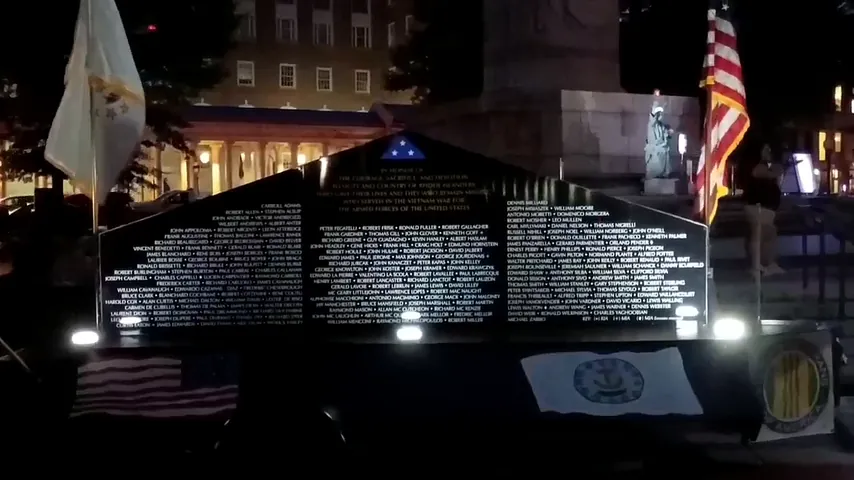
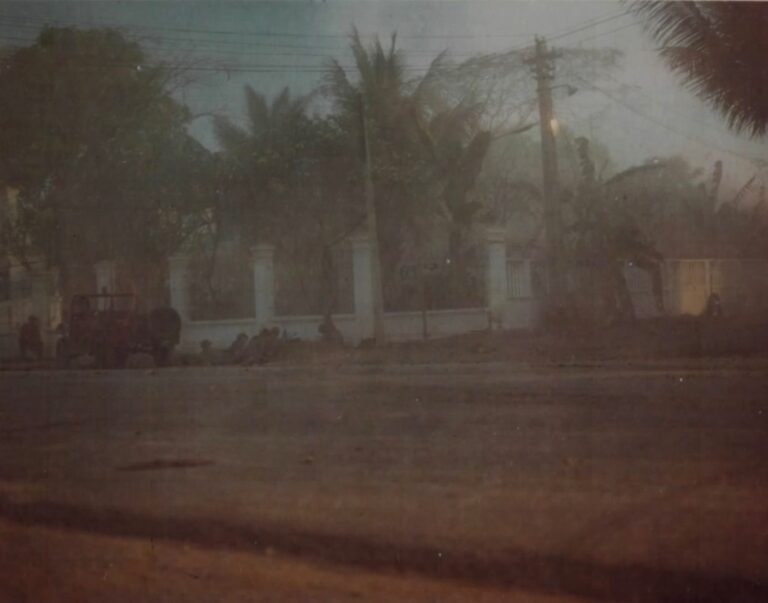
Alongside the physical memorial, the Rhode Island Vietnam Veterans Memorial will include an augmented reality (AR) component built with Membit. AR places images, video, sound, voices and 3D objects into the real world around you.
When a visitor holds up a phone near the memorial, the space around it opens into a series of portals, doorways into moments in the history of the war. Their curiosity leads them around the memorial: they notice something, step closer, find another portal, and the story unfolds as they go.
The monument remains the place of honor and remembrance. The AR layer becomes a place of understanding.
How It Works
Your Phone Becomes the Doorway
Hold Up Your Phone
Stand near the memorial and raise your phone. The riverbank around the stone opens into portals you can see, hear and approach.
Follow Your Curiosity
Notice something, step closer, find the next portal. The story unfolds as you move around the memorial, at your own pace.
Walk Inside
Step through the doorway and the moment surrounds you: photographs, film, sound and the voices of the men and women who were there.
The Experience
Three Chapters. One Story.
The portals are organized in three chapters that follow the war from its beginnings to the long road home.
 I
Chapter One · The Road to War
How We Got There
How and why the United States became involved in Vietnam, and the decisions that set the stage for massive escalation.
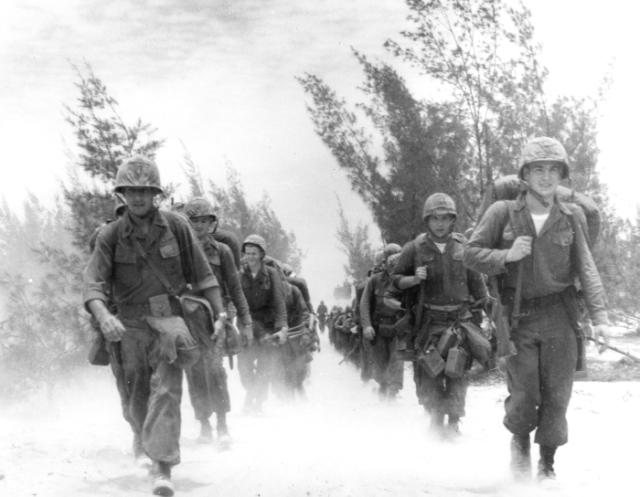
Marines land at Da Nang, March 1965. National Archives.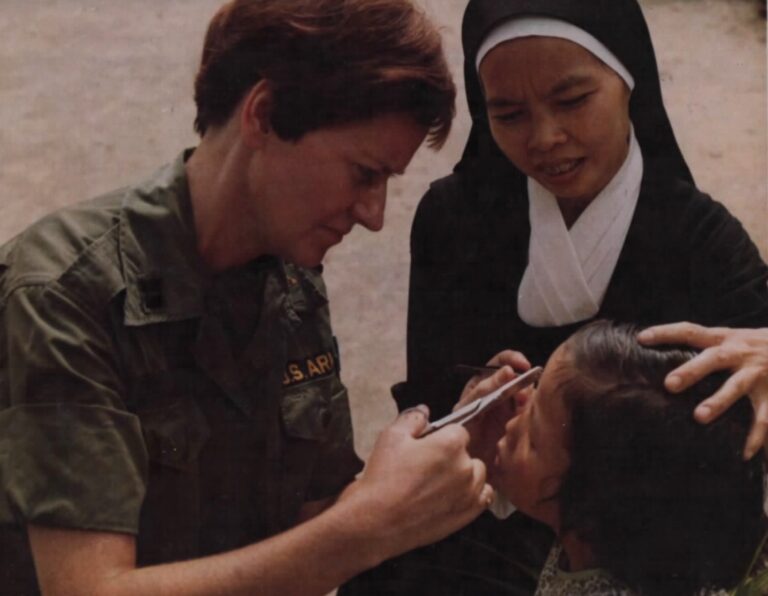 II
Chapter Two · In Country
The Years of Service
The years when hundreds of thousands of American troops served in Vietnam, and what it was actually like for the young men and women who were there.
Army nurse, 93rd Evacuation Hospital. National Archives.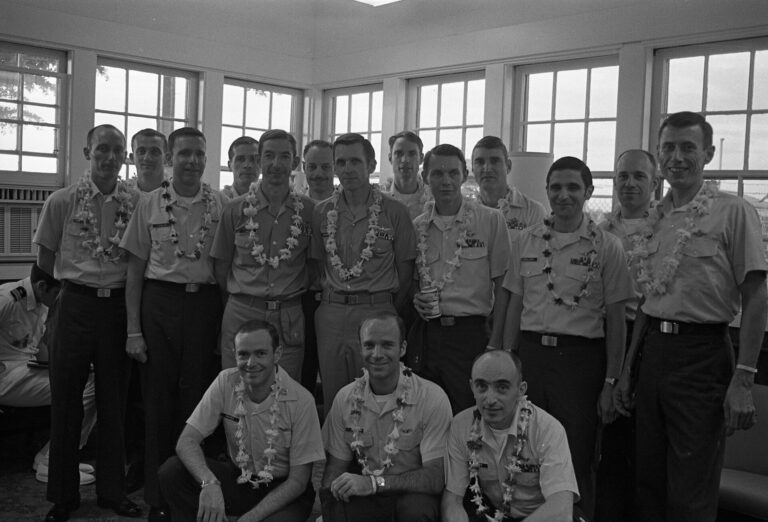 III
Chapter Three · The Aftermath
Coming Home
The struggle to rejoin a society that often didn’t welcome them, the lasting health effects of Agent Orange and other exposures, and the many ways the country let its Vietnam veterans down.
Operation Homecoming, Hickam AFB, 1973. National Archives.Archival photographs illustrate each chapter. What the portals hold will come from Rhode Island’s Vietnam veterans and their families.
Why It Matters
Whatever we believe about a war, the people we send to fight it deserve our support when they come home.
The main goal is education, especially for young people, for whom Vietnam can feel as distant as the Civil War. This is the lesson the country learned the hard way, and the one every visitor should carry home.
Built From Their Voices
The Story Comes From the People Who Lived It
Nothing in these portals is decided in advance. The veterans’ own voices and stories will be at the center, and the experience is built in four steps.
Listen
Interview Rhode Island’s Vietnam veterans and their families.
Research
A research team gathers historical context, photographs, film and documents.
Decide Together
With the veterans, the memorial committee and the wider community, identify what visitors most need to know and feel.
Build
Only then are the experiences designed to carry it.
Are you a Rhode Island Vietnam veteran, or family of one?
Your story can help shape what visitors see, hear and feel at the memorial. Share it with us and our team will be in touch.
Beyond the Stone
What a Monument Alone Can’t Do
It Keeps Growing
New stories, interviews and names can be added for years after the stone is set.
It Travels
Students who can’t come to Providence can experience it in their own classrooms.
Room for Every Story
Individual stories of service members and oral histories that would overwhelm a physical design.
It Honors Our Donors
Recognition for the donors who made the memorial possible.
Support the Memorial →Because it brings images, sound, video and objects into the space around you, it can reach people in a way a plaque cannot.
Be Part of It
Help Build the Living Memorial
Every story shared and every gift given brings this memorial, and the history it holds, closer to the Providence River.
Augmented reality experience built with Membit.